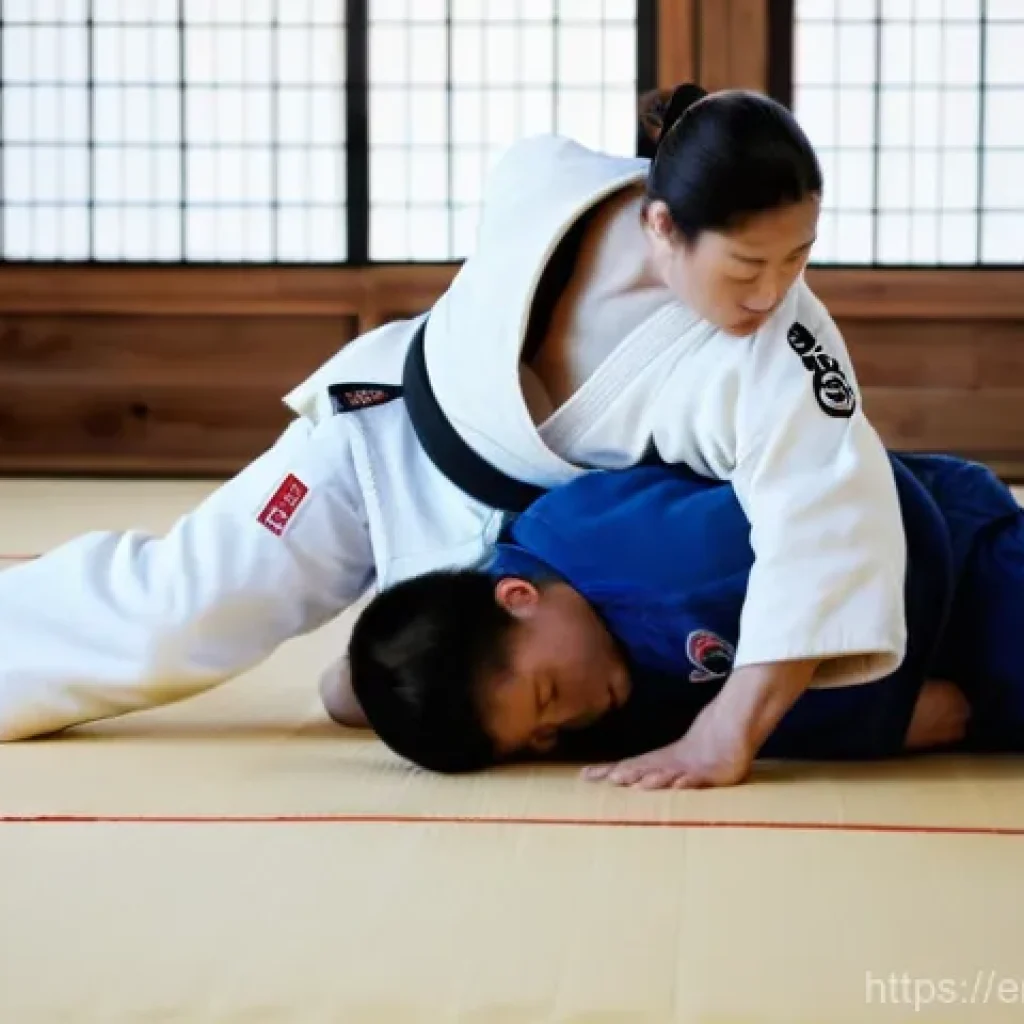
Stepping onto the mat for the first time, whether you’re a seasoned athlete looking for a new challenge or just curious about martial arts for fitness and self-defense, can feel a bit like stepping into a whole new world, can’t it?
I know that feeling perfectly! There’s an incredible energy in a dojo, a sense of discipline, community, and an amazing physical workout that engages every muscle.
But let’s be honest, those Japanese terms that get thrown around? They can be seriously intimidating, making you feel a bit lost in translation, even if you’re nailing the techniques.
Understanding the language of Judo isn’t just about sounding smart; it’s about truly grasping the essence of each move, the strategy, and the respect inherent in the art.
I remember when I first started, trying to decipher what “Uki Goshi” meant while simultaneously trying not to fall over – it was a lot! But once those terms clicked, my learning accelerated, and my confidence on the mat soared.
As more and more people discover the holistic benefits of martial arts, embracing everything from physical conditioning to mental focus and emotional control, having a solid foundation in terminology is more crucial than ever for truly connecting with the practice and avoiding frustration.
It’s what transforms a confusing sequence of movements into a clear, intentional flow. Ready to demystify those terms and truly unlock your potential in Judo?
Let’s dive deeper into it below.
Mastering the Language of Control: Unpacking Holds and Submissions
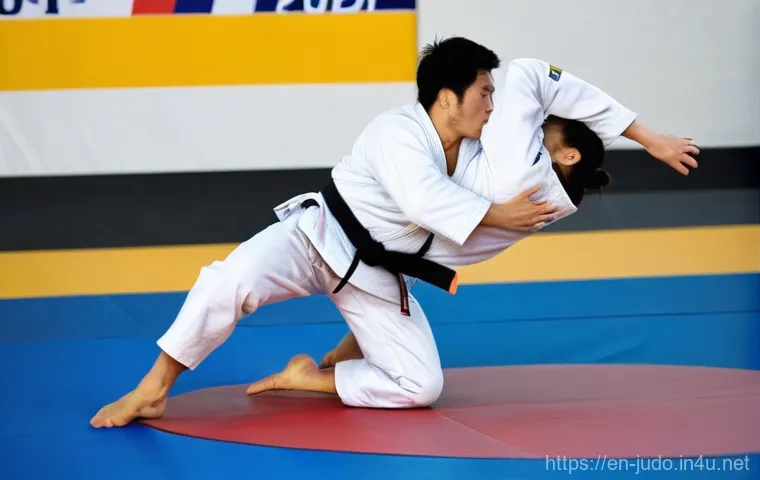
You know, there’s a moment in Judo when you transition from just performing a technique to truly understanding it, and for me, that often happened when I finally grasped the underlying terminology. It’s not just about throwing someone; it’s about control, leverage, and understanding the body’s mechanics. When you get into groundwork, or Ne-waza, the Japanese terms become your roadmap to dominance, or at least, escaping a sticky situation! I remember my early days, feeling completely lost during ground drills, wondering what my sensei meant by “Osaekomi” or “Shime-waza.” It felt like everyone else had a secret decoder ring, and I was just flailing about. But once I started connecting the words to the actions, it was a total game-changer. It’s not just about memorizing; it’s about experiencing the effectiveness of these techniques and appreciating the precision behind them. Learning these terms helped me anticipate my opponent’s moves, set up my own, and really start thinking several steps ahead. It transforms the chaos of a scramble into a calculated chess match on the mat. Trust me, putting in the effort here pays dividends in your overall progress and confidence.
The Art of Pinning: Essential Osaekomi-waza
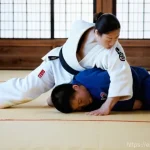
When your instructor shouts “Osaekomi!” during randori or a match, it’s not just a fancy way of saying “hold them down!” It literally means “pinning technique,” and it’s where the real chess match of groundwork begins. The goal is to control your opponent for a sustained period, typically 20 seconds for an Ippon in competition, preventing them from escaping. There are a few core ones you’ll encounter constantly. Take Kesa-gatame (scarf hold), for instance; it was one of the first pins I truly felt comfortable with. The way you wrap your arm around their head and control their arm, using your body weight to completely immobilize them – it’s a brilliant blend of balance and pressure. Then there’s Hon Kesa-gatame, a strong variation. Kami Shiho-gatame (upper four-quarter hold) feels entirely different, as you’re controlling from above their head, making it super effective against stronger opponents who might try to bridge. Yoko Shiho-gatame (side four-quarter hold) and Tate Shiho-gatame (straight four-quarter hold) round out the common pins. Each one has its nuances, its strengths, and its vulnerabilities, and understanding the names helps you visualize and execute them much more effectively. I used to think a pin was just a pin, but oh, how wrong I was! Each one opens up different follow-up attacks or defensive strategies.
Submitting with Control: Exploring Shime-waza and Kansetsu-waza
Now, this is where things get really interesting, and frankly, a bit intense, but always controlled and safe in a good dojo! Shime-waza translates to “choking techniques,” and no, it’s not about cutting off air, but rather applying pressure to the carotid arteries to temporarily restrict blood flow to the brain, leading to a quick and safe tap. I remember my first time getting caught in a properly applied Hadaka-jime (naked choke); it was eye-opening how quickly you feel the need to tap, and it really taught me the power of these techniques when done correctly. Then there’s Okuri-eri-jime (sliding lapel choke), which uses your opponent’s own gi against them – super effective! Juji-gatame (armbar) is probably the most recognized Kansetsu-waza, or “joint lock technique,” and boy, is it effective. When I first learned it, the sensation of isolating the elbow joint and applying pressure was almost shocking in its simplicity and power. It’s a testament to Judo’s comprehensive approach to self-defense. These techniques, while formidable, are taught with immense emphasis on safety and respect, always ensuring your training partner is safe and taps early. Mastering these terms helps you understand the different applications and the critical points of control. It’s about leveraging anatomy, not brute force, and that’s a beautiful thing about Judo.
The Language of Movement: Decoding Throws and Body Mechanics
Judo is often called “the gentle way,” but anyone who’s been on the receiving end of a well-executed throw knows there’s immense power involved! It’s not about being bigger or stronger, though that certainly doesn’t hurt. It’s about efficiency, balance, and kinetic energy, all encapsulated in a rich vocabulary. I can still vividly recall the sheer frustration of trying to land a basic throw like O-soto-gari (major outer reap) in my early days. My sensei would yell “Kuzushi!” or “Tsukuri!” and I’d just stare blankly, wondering what alien language he was speaking. But as I immersed myself, these terms became more than just words; they were the very building blocks of movement, guiding my body and mind. Understanding terms like Kuzushi (off-balancing), Tsukuri (entry/fitting-in), and Kake (execution) changed everything. It transformed my throws from clumsy attempts into fluid, powerful actions. It’s like learning to play an instrument – you start with scales, but eventually, you’re playing symphonies. These terms are your notes, and mastering them lets you compose your own powerful Judo sequences.
Getting to Grips: Understanding Kumi-kata
Before you can even dream of throwing someone, you need to establish a good grip, and that’s where Kumi-kata comes in. It’s far more than just grabbing your opponent’s gi; it’s an art form in itself, a silent conversation of intentions. A good grip dictates the entire exchange. I remember being constantly frustrated by opponents who had superior Kumi-kata, feeling like I was always a step behind. My sensei would tell me, “The grip is the fight,” and it truly is. A standard grip often involves one hand on the lapel and the other on the sleeve, but there are countless variations, each with its own advantages and disadvantages. Understanding which grip to use against different opponents or in different situations is crucial. Are you going for an Uchi Mata? Then a high lapel grip might be your best friend. Defending against a dominant grip? Then learning to break their grip (Kumi-kata-gaeshi) becomes paramount. It’s a constant battle for dominance, even before the actual throw begins. Mastering your Kumi-kata is foundational and will dramatically improve your ability to set up and execute throws. It’s the handshake before the dance, and a strong handshake goes a long way!
The Dynamic Dozen: Exploring Nage-waza Categories
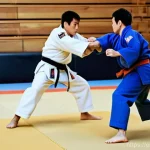
When we talk about throws, we’re diving into Nage-waza, which is divided into three main families based on how the throw is initiated: Te-waza (hand techniques), Koshi-waza (hip techniques), and Ashi-waza (foot/leg techniques). Each category has its own unique feel and application. For example, Seoi-nage (shoulder throw), a classic Te-waza, relies heavily on pulling and rotating your opponent over your back, using your arms and shoulders for power. I absolutely love the feeling of a perfectly executed Seoi-nage; it feels incredibly fluid and powerful. Then you have Koshi-waza like O-goshi (major hip throw), where you literally use your hip as a fulcrum to lift and spin your opponent. These are incredibly satisfying when you get the timing just right. And let’s not forget Ashi-waza, like De-ashi-harai (forward foot sweep), which relies on perfect timing and balance disruption rather than raw strength. It’s an art of precision, where a slight shift in weight or a perfectly timed sweep can send your opponent flying. Understanding these categories not only helps you learn new techniques but also helps you analyze your own throwing style and identify areas for improvement. It’s fascinating how each category presents its own set of challenges and rewards.
Stepping onto the Mat: Essential Dojo Etiquette and Commands
Walking into a Judo dojo for the first time, you immediately feel a certain reverence and respect in the air. It’s not just a gym; it’s a place of learning, discipline, and tradition. Understanding the basic etiquette and commands isn’t just about being polite; it’s about showing respect for the art, your sensei, and your fellow judoka. I remember feeling a bit awkward initially, unsure when to bow, how to sit, or what to say. But pretty quickly, I realized that these rituals are integral to the practice, fostering an environment of focus and humility. It’s the framework that supports the intense physical and mental training we undertake. Ignoring these traditions would be like trying to play a symphony without an orchestra – it just wouldn’t be the same. Embracing the etiquette makes you feel like a true part of the community, and it elevates the training experience beyond just a physical workout to a holistic practice. It’s about respecting the past and upholding the values of Judo.
Respecting the Space: Dojo Customs You Need to Know
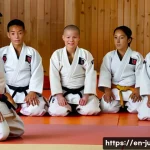
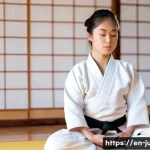
One of the first things you’ll learn is the importance of bowing, or Rei. You bow when you enter and leave the dojo, when you step onto and off the mat (Tatami), and to your sensei and training partners. It’s a simple gesture, but it signifies respect and readiness. Then there’s the sitting posture: Seiza. Sitting on your heels might feel uncomfortable at first, especially for those of us not accustomed to it, but it’s a traditional and respectful way to sit when listening to instructions or observing. I used to fidget constantly, but over time, I’ve come to appreciate the discipline it instills. Keeping your Gi (Judo uniform) clean and tidy is also paramount; it shows respect for yourself and the dojo. Leaving your shoes neatly outside the mat area, keeping quiet during instructions, and always being ready to help a fellow judoka – these are all unspoken rules that contribute to the positive atmosphere. It’s all about fostering a sense of community and mutual respect, which is something I deeply value in my dojo.
Listening to Your Sensei: Key Commands and Responses
During practice, your sensei will use a variety of commands to guide the session, and understanding these is crucial for a smooth and productive workout. “Hajime!” means “Begin!” or “Start!”, signaling the start of an exercise or match. Conversely, “Matte!” means “Wait!” or “Stop!”, which is used to pause or halt an activity. These are probably the two most frequent commands you’ll hear. When your sensei says “Yame!“, it means “Stop!” and signifies the end of an activity or a match. I’ve definitely had moments where I was so engrossed in randori that I almost missed a “Matte!” – always gotta stay attentive! Then there’s “Sensei ni Rei!” (Bow to the teacher) and “Otagai ni Rei!” (Bow to each other), which are used at the beginning and end of classes to show collective respect. Learning these isn’t just about following orders; it’s about being an active and engaged participant in your learning journey. It helps maintain order, safety, and a respectful learning environment. Plus, it makes you feel like you’re truly part of something special, connecting to the rich traditions of Judo.
The Art of Off-Balancing: Unlocking the Power of Kuzushi
If there’s one concept in Judo that took me the longest to truly grasp but completely transformed my game, it’s Kuzushi. It’s more than just “off-balancing”; it’s the art of breaking your opponent’s posture and stability, putting them in a vulnerable position where they can be easily thrown. I remember my early days, just trying to muscle people over, which usually ended with me on my back. My sensei would patiently explain, “No Kuzushi, no throw!” and I’d nod, pretending to understand, but inside, I was clueless. It wasn’t until I started focusing intently on their reactions to my pulls and pushes, feeling their weight shift, that the lightbulb finally went off. It’s a delicate dance, a push and pull, a momentary disruption that opens up a window for your attack. Without proper Kuzushi, even the most technically perfect throw will likely fail. It’s truly the secret ingredient that makes Judo throws so incredibly effective, allowing a smaller person to throw a larger opponent. It’s that fleeting moment of vulnerability that you create, and then, BAM, you capitalize on it. This concept, more than any other, taught me the importance of strategy and sensitivity over brute force in Judo.
The Eight Directions: Understanding Happo-no-kuzushi
The concept of Happo-no-kuzushi, or the “eight directions of off-balancing,” is fundamental to truly mastering this crucial element. Imagine your opponent standing perfectly upright, balanced in all directions. Your job is to disrupt that balance by pushing or pulling them in one of eight distinct directions: forward, backward, left, right, and the four diagonal directions. It sounds simple, but applying it effectively in the dynamic environment of a grappling exchange is incredibly challenging. I personally found drilling Happo-no-kuzushi with a partner to be incredibly insightful. You learn to feel their resistance, their posture, and anticipate how they will react to your movements. For instance, if you pull your opponent directly forward, they’ll naturally step back to regain balance. That backward step is your opportunity for a forward throw like Tai Otoshi. Or, if you push them to their right front corner, their weight shifts to their left leg, making their right leg light and ripe for an Ashi-waza (foot sweep). Understanding these directional imbalances gives you a systematic approach to breaking an opponent’s posture, rather than just randomly pushing and pulling. It’s like having a map to their center of gravity.
Timing is Everything: Applying Kuzushi in Motion
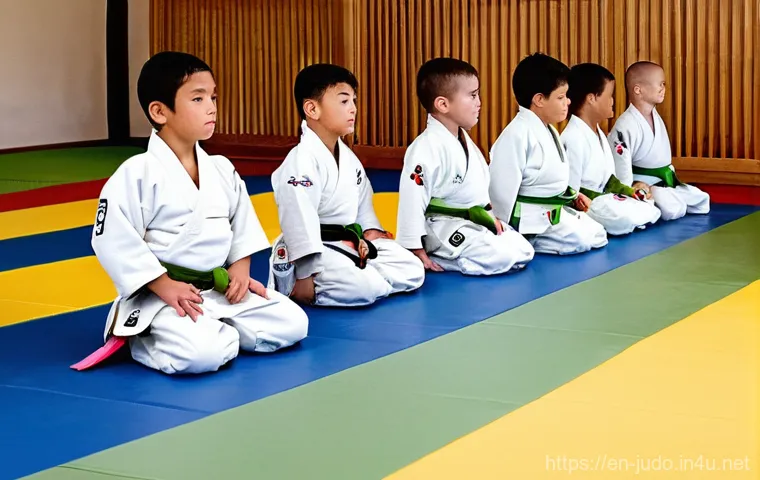
While understanding the eight directions is vital, applying Kuzushi isn’t just about static pushes and pulls; it’s about creating and exploiting imbalance in continuous motion. This is where Judo becomes a dynamic art form. You often generate Kuzushi through your own movement, by stepping, turning, or even feigning an attack. For example, if you quickly step to the side, your opponent might instinctively follow or adjust, creating a momentary shift in their balance that you can then capitalize on. I often found myself trying to force throws before the Kuzushi was fully established, leading to frustrating failures. My sensei would always remind me, “Wait for the moment! Feel the opening!” That “moment” is when their balance is completely broken, and they are literally falling into your throw. This requires incredible sensitivity, timing, and a deep understanding of body mechanics. It’s a skill that only truly develops with countless hours on the mat, feeling the nuances of your opponent’s weight and movement. When you get it right, it feels effortless, almost magical. It’s a beautiful synergy of mind and body, and it’s what makes Judo so much more than just a physical sport.
Beyond the Gi: Essential Judo Vocabulary for Every Judoka
Stepping into Judo means stepping into a culture rich with tradition, and part of that tradition is its unique vocabulary. While the throws and pins might be the most exciting part, understanding the terms related to your gear, ranking, and general practice helps you feel more connected and informed. I remember my first day, being handed a Gi and thinking, “Okay, this is just clothes.” But quickly I learned it’s so much more! It’s your armor, your connection to the art, and it even becomes part of the techniques themselves. There’s a certain pride in wearing a clean, well-fitting Gi, just as there’s a clear path of progression marked by the color of your belt. These terms might seem secondary to the physical techniques, but they form the backbone of the Judo experience, giving structure and meaning to your journey. It’s like knowing the difference between a guitar and a violin; they’re both instruments, but the details matter. Embracing this holistic understanding enriches your entire practice and makes you feel more authentically embedded in the Judo community.
Your Uniform: More Than Just a Gi
The Gi, your Judo uniform, is iconic, and it’s essential to know its components. The heavy cotton jacket is called the Uwagi, the trousers are the Zubon, and the belt, which signifies your rank, is the Obi. Each part has a purpose, from the reinforced lapels used for gripping to the loose-fitting trousers that allow for full range of motion. I remember the first time I learned to tie my Obi correctly; it felt like a small but significant rite of passage. It’s not just about looking the part; a properly worn Gi is crucial for safe and effective training. You’ll hear terms like “grabbing the eri” (lapel) or “controlling the sode” (sleeve) constantly, so knowing these parts of the uniform is fundamental to understanding grip fighting and throwing techniques. It’s a garment designed for purpose, and respecting it is part of respecting the art itself. Keeping it clean and well-maintained is a simple but important aspect of your overall discipline. It’s your second skin on the mat, and it definitely takes a beating, so good care is a must!
Belts and Ranks: Understanding Kyu and Dan
In Judo, your progress is visibly marked by the color of your Obi (belt), which denotes your rank. These ranks are divided into two main categories: Kyu ranks and Dan ranks. Kyu ranks are for beginners and intermediate practitioners, starting with white and progressing through colors like yellow, orange, green, blue, and brown. I remember the excitement of earning my first colored belt; it was a tangible symbol of my hard work and progress, a real morale booster! These are considered student grades. Once you master the Kyu ranks, you move into the Dan ranks, starting with black belt. A black belt, or Shodan (first-degree black belt), isn’t the end of the journey; it’s just the beginning of a deeper level of understanding and responsibility. The Dan ranks continue through various levels, often denoted by stripes on the black belt, or eventually red and white belts for very high ranks. Understanding this ranking system provides a clear path for progression and instills a sense of ambition and continuous learning. It’s not just about the color of the belt; it’s about the knowledge, skill, and dedication that it represents. It’s a constant journey of improvement, and each belt is a milestone, not a finish line.
| Judo Term | Pronunciation (approx.) | Meaning | Quick Insight |
|---|---|---|---|
| Dojo | Doh-joh | Place of the Way / Training Hall | More than a gym; a respectful learning environment. |
| Sensei | Sen-say | Teacher / Instructor | The person guiding your Judo journey. |
| Gi | Gee | Uniform | Your essential training attire. |
| Ukemi | Oo-keh-mee | Breakfall / Falling safely | Crucial for protecting yourself during throws. |
| Randori | Ran-doh-ree | Free practice / Sparring | Applying techniques in a live, dynamic setting. |
| Kuzushi | Koo-zoo-shee | Off-balancing | The art of breaking an opponent’s posture. |
| Uke | Oo-keh | Receiver of the technique | The person being thrown or submitted. |
| Tori | Toh-ree | Executor of the technique | The person performing the throw or submission. |
The Referee’s Call: Deciphering Match Commands and Scoring
For many, the ultimate test of their Judo skills comes in competition, and if you’ve ever watched a match, you know how quickly things can change with a single command from the referee. Understanding these commands and the scoring system isn’t just for competitors; it helps you appreciate the strategic depth of Judo and follow along with the action. I remember my first time watching a high-level competition, feeling completely lost by the constant shouts from the referee – “Ippon!”, “Waza-ari!”, “Mate!”. It felt like a foreign language spoken at warp speed. But once I learned what each call meant, the matches transformed from a blur of motion into a thrilling display of skill and strategy. It’s about recognizing those critical moments, understanding why a point was scored, or why a match was stopped. It adds a whole new layer of excitement and appreciation for the sport. It’s not just about who throws who, but how and why, and the referee’s calls are the narrative of that exchange. It gives you an insider’s view into the intricacies of competitive Judo.
Starting and Stopping: Basic Match Directives
In a Judo match, the referee controls the flow of the contest with specific commands. The match begins with “Hajime!” (Begin!), which signals the competitors to engage. It’s that adrenaline-fueled moment when everything kicks off. If the action needs to be paused for any reason – perhaps a competitor’s Gi needs adjusting, or they’ve moved out of bounds – the referee will call “Matte!” (Wait!). This temporarily stops the clock and the action. Once the issue is resolved, the match restarts with “Yoshi!” (Continue!). Finally, when the match is over, either due to a score, time running out, or an injury, the referee will declare “Sore made!” (That is all / Time up!). I’ve had my share of intense moments where a timely “Matte!” gave me a much-needed breather or helped me re- strategize. These commands are essential for maintaining safety and fairness in competition, and recognizing them allows you to follow the ebb and flow of a match without confusion. They are the punctuation marks of the contest, guiding the narrative for everyone watching.
Scoring Points: Ippon, Waza-ari, and Beyond
The ultimate goal in Judo is to achieve an Ippon, which translates to “one full point” and immediately wins the match. An Ippon is awarded for a throw that lands an opponent largely on their back with considerable force, speed, and control, or for a sustained Osaekomi (pin) for 20 seconds, or a successful Shime-waza (choke) or Kansetsu-waza (joint lock) that results in a tap out. There’s nothing quite like the roar of the crowd when an Ippon is scored! Below an Ippon is a Waza-ari, which means “half point.” A Waza-ari is awarded for a throw that meets some but not all the criteria for an Ippon, such as lacking sufficient force or landing only partially on the back. Two Waza-ari combine to make an Ippon (often referred to as Waza-ari Awasete Ippon). There are also penalties, called Shido, for minor infringements, which accumulate. Three Shido result in a Hansoku-make (disqualification), which also counts as an Ippon for the opponent. Understanding these scoring terms makes watching Judo competitions incredibly exciting and helps you appreciate the fine margins between victory and defeat. It’s truly a game of precision, power, and strategy, all boiling down to those crucial calls.
Wrapping Things Up
Whew! We’ve covered a lot of ground today, diving deep into the fascinating world of Judo terminology. From the foundational grips to the exhilarating throws and decisive submissions, understanding these terms isn’t just about memorization; it’s about unlocking a deeper appreciation and a more intuitive understanding of this incredible martial art. When you connect the Japanese words to the movements and principles, everything starts to click. It truly transforms your practice from just going through the motions to engaging in a thoughtful, strategic dance. I’ve personally found that this linguistic journey is just as rewarding as the physical one, enhancing every moment I spend on the mat.
Useful Information to Know
1. Don’t be afraid to ask your sensei or senior students for clarification on terms you don’t understand. Everyone started somewhere, and their guidance is invaluable.
2. Watch high-level Judo competitions and actively try to identify the techniques and referee calls based on the terminology you’ve learned. It brings the theory to life!
3. Consider keeping a small notebook to jot down new terms and their meanings, along with any personal insights or tips from your instructors. I still refer to my old notes sometimes!
4. Focus on mastering the basic terms first before moving on to more complex ones. A solid foundation makes everything else easier to build upon, just like in your physical training.
5. Remember that Judo is a journey, not a destination. Embrace the learning process, both physically and intellectually, and enjoy every step of mastering its rich vocabulary.
Key Takeaways
Ultimately, learning Judo terminology is a powerful tool that elevates your entire experience. It sharpens your understanding of techniques like Osaekomi-waza and Shime-waza, clarifies the dynamics of Nage-waza, and makes you a more informed participant in the dojo and during competitions. This deeper linguistic connection not only enhances your performance but also fosters a profound respect for the art’s traditions and its global community. It’s about becoming fluent in the language of Judo, allowing you to connect with its principles on a much richer, more intuitive level, making every session more meaningful and effective.
Frequently Asked Questions (FAQ) 📖
Q: uestions
A: nswered!Stepping onto the mat for the first time, whether you’re a seasoned athlete looking for a new challenge or just curious about martial arts for fitness and self-defense, can feel a bit like stepping into a whole new world, can’t it?
I know that feeling perfectly! There’s an incredible energy in a dojo, a sense of discipline, community, and an amazing physical workout that engages every muscle.
But let’s be honest, those Japanese terms that get thrown around? They can be seriously intimidating, making you feel a bit lost in translation, even if you’re nailing the techniques.
Understanding the language of Judo isn’t just about sounding smart; it’s about truly grasping the essence of each move, the strategy, and the respect inherent in the art.
I remember when I first started, trying to decipher what “Uki Goshi” meant while simultaneously trying not to fall over – it was a lot! But once those terms clicked, my learning accelerated, and my confidence on the mat soared.
As more and more people discover the holistic benefits of martial arts, embracing everything from physical conditioning to mental focus and emotional control, having a solid foundation in terminology is more crucial than ever for truly connecting with the practice and avoiding frustration.
It’s what transforms a confusing sequence of movements into a clear, intentional flow. Ready to demystify those terms and truly unlock your potential in Judo?
Let’s dive deeper into it below.
Frequently Asked Questions
Q: Why are so many Judo terms in Japanese? Isn’t it just an unnecessary hurdle for English speakers?
A: Oh, I totally get why this can feel like an extra hurdle at first! I truly do. When I was starting out, I definitely thought, “Couldn’t we just call it a ‘shoulder throw’ instead of ‘Seoi Nage’?” But here’s the thing: keeping the Japanese terminology is actually incredibly practical and respectful to the art’s origins.
First, Judo was founded in Japan by Jigoro Kano, who meticulously renamed and reclassified many techniques to be descriptive and logical. This created a standardized language that allows Judoka from any country – Sweden, Egypt, America – to understand each other perfectly on the mat.
Imagine trying to explain “O Soto Gari” in five different languages during an international training camp! It would be chaos, right? The Japanese terms act as a universal language.
Beyond that, many Japanese words carry a depth of meaning that a direct English translation just can’t quite capture. “Kuzushi,” for example, isn’t just “unbalancing”; it encompasses the art of breaking an opponent’s balance in all eight directions, a fundamental concept in Judo.
So, while it feels like a challenge, it’s actually about preserving precision, honoring tradition, and fostering a global community. It’s truly a beautiful aspect once you get past the initial intimidation!
Q: How important is it really to learn all these Japanese terms? Can’t I just focus on the physical techniques?
A: This is a fantastic question, and one I wrestled with myself! While it’s true that the physical practice is paramount – you absolutely need to do Judo to learn Judo – understanding the terminology is far more than just academic; it profoundly impacts your physical learning and overall progress.
Think about it: when your Sensei shouts “Hajime!” to start a drill or calls out “Uchi Mata!” for a technique, knowing what those terms mean helps you react instantly and intelligently.
It’s like having a clearer mental map of what your body is supposed to do. I remember a specific moment where I was struggling with a sweep, and once I really understood that “Gari” meant “reap”, the intent of the movement suddenly clicked for me.
It’s not just memorizing a word; it’s understanding the why and how behind the movement. Learning these terms helps you “actively learn” – you start integrating new concepts with what you already know, deepening your “Judo IQ”.
Plus, it shows respect for your instructors and the tradition, which is a huge part of the dojo environment. Trust me, your learning will accelerate, and you’ll feel much more connected to the art when you speak its language.
Q: What’s the easiest or most effective way to start learning and remembering all this new terminology without getting overwhelmed?
A: This is where I can really share some “been there, done that” advice! When I first started, I tried to just cram lists, and honestly, it felt like trying to drink from a firehose!
The trick, I’ve found, is to approach it smartly. First, start with the most common commands and general terms you hear every session, like “Dojo” (training hall), “Sensei” (instructor), “Ukemi” (breakfall), “Hajime” (begin), and “Matte” (stop).
These are your daily bread and butter. Second, and this is a game-changer, realize that many Judo terms are actually modular. They’re often combinations of smaller Japanese words, like building blocks.
For instance, “O” means “big,” “Ko” means “small,” “Soto” means “outside,” and “Uchi” means “inside”. So, “O Soto Gari” is a “big outside reap,” and “Ko Uchi Gari” is a “small inside reap”.
Once you learn these root words, you can decipher dozens of techniques! I personally found flashcards (digital or physical) incredibly helpful, especially for those root words.
And seriously, don’t underestimate the power of simply listening in class and asking your Sensei or higher-ranked Judoka when you’re unsure. They’ve all been exactly where you are!
Repetition, both on and off the mat, is key. Write things down in a journal, watch videos, and actively try to name the techniques as you drill them. You’ll be surprised how quickly it starts to stick!
Remember, it’s a journey, not a race.