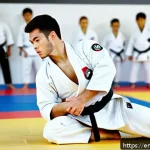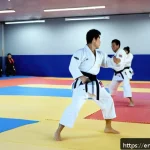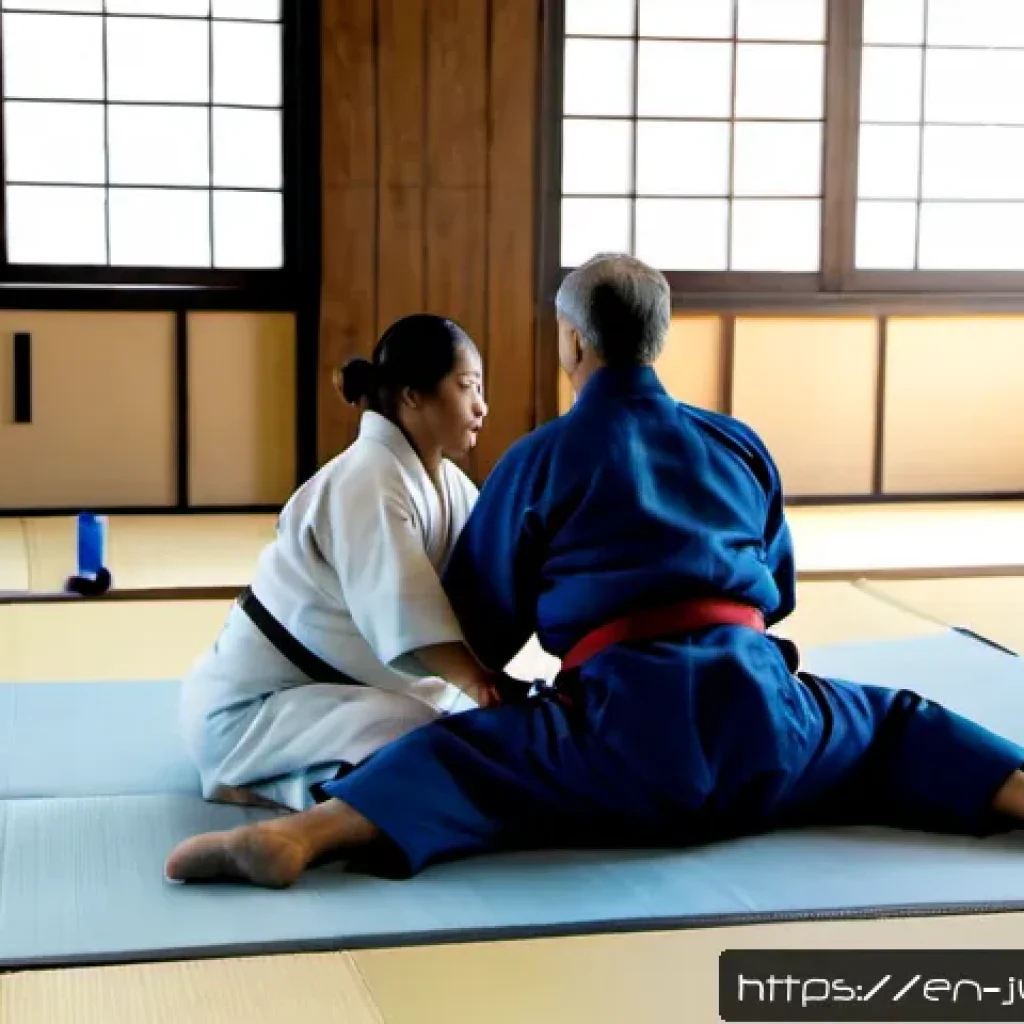
Judo can support philosophical thinking by giving physical form to ideas such as balance, self-control, respect, and adaptation. It does not automatically turn every practitioner into a philosopher, but it can create situations worth examining carefully.
Technique, controlled partner work, etiquette, and discipline all raise questions about how people act when goals, risks, and other people’s needs are involved.
A throw may be a technical result, yet the process of learning it can also reveal habits of judgment. The meaning of these lessons depends on the club, instructor, and the practitioner’s own willingness to reflect.
Why Physical Training Can Encourage Reflection
Experience as a starting point for ideas
Philosophical reflection asks how actions, values, knowledge, and decisions connect. Judo offers concrete material for that kind of inquiry. A practitioner may notice that a technique fails not because the idea was wrong, but because distance, timing, posture, or attention was off. That experience can lead to useful questions: What did I assume? What evidence did I miss? When should confidence give way to revision?
The value is not in treating every drill as a profound lesson. Rather, repeated practice gives abstract topics a clear setting. Resilience, cooperation, risk, and responsibility become easier to discuss when they have been felt during controlled training.
The difference between discipline and obedience
Judo discipline can include showing up consistently, following etiquette, listening to instruction, and practicing with care. Still, discipline is not the same as passive obedience. Thoughtful training leaves room to ask why a rule exists, how it protects people, and when clarification is needed. A student can respect an instructor while remaining attentive to safety, personal limits, and the condition of a training partner.
Not every club explicitly teaches philosophical concepts. In some places, these discussions may be direct; in others, they may remain personal reflections that arise from ordinary practice.
Balance, Timing, and Adaptation in Practice
Responding rather than forcing outcomes
Judo often rewards attention to movement and changing conditions. Trying to force a planned action when balance or timing is wrong can make the attempt ineffective or unsafe. Learning to respond does not mean becoming passive. It means noticing what is actually happening before choosing an action.
This can support a broader habit of judgment. In a disagreement or difficult decision, a person may benefit from checking the situation rather than pushing harder on an initial plan. The comparison has limits, but the basic question carries over: am I responding to reality, or only to what I expected?
Learning from resistance and error
A training partner’s resistance is useful information, not merely an obstacle. It can show where a technique lacks control, where communication is unclear, or where an approach needs adjustment. Errors can be frustrating, but they also make assumptions visible. Reflection turns a failed attempt into a more precise question for the next repetition.
That process should not be romanticized. Some mistakes simply require correction, and safety comes before experimentation. Productive learning depends on controlled partner work, appropriate instruction, and a willingness to slow down when needed.
Respect and Responsibility With a Training Partner
Consent, safety, and mutual progress
Judo is learned with other people, so progress is not purely individual. Partners need to communicate, work within agreed levels of intensity, and protect one another during practice. Consent and safety matter because a partner is not training equipment. Their comfort, readiness, and ability to stop or adjust a drill affect what responsible practice looks like.
This relationship makes ethics practical. A person may want to improve quickly, but that goal does not justify careless behavior. Mutual progress is more likely when both people can train with trust and when technical ambition is balanced with restraint.
Competition without treating others as objects
Competition can test preparation, composure, and decision-making. It can also create pressure to view an opponent only as something to overcome. A more reflective approach recognizes that competitive effort and respect can exist together. The other person has agency, limits, and dignity, even when both participants are trying to win.

This does not remove the desire to perform well. It changes the standard for how that desire is pursued. Good judgment includes not only the outcome, but also the manner in which one trains and competes.
| Training situation | Question for reflection |
|---|---|
| A technique fails | What assumption about timing, balance, or control needs to be reconsidered? |
| A partner asks to slow down | How should personal goals be balanced with safety and consent? |
| Competitive pressure rises | Can determination remain compatible with respect for the other person? |
Applying Judo Lessons Beyond the Mat
Decision-making under pressure
Training can provide examples of making choices while attention is limited and conditions change quickly. A practitioner may need to pause, regain balance, choose a simpler option, or abandon an unworkable attempt. These are not direct solutions for work, family, or public life, but they can encourage habits such as observation, restraint, and revision.
The strongest transfer is usually not a dramatic martial arts lesson. It is a modest practice of asking better questions before acting: What is happening now? What are the risks? Who else is affected? What can be adjusted?
Limits of martial arts metaphors
Judo metaphors can be useful, but they should not be stretched too far. A workplace conflict is not a match, and a personal disagreement should not be approached as an opponent to defeat. Real-world decisions may involve unequal power, long-term consequences, and responsibilities that do not resemble training.
For that reason, judo can be a prompt for reflection rather than a complete philosophy of life. Its ethical or philosophical value remains open to interpretation, and it will differ among practitioners.
Closing Thoughts
Judo can make reflection more grounded because it places choices inside movement, effort, and shared responsibility. Balance, adaptation, and respect are not merely ideas when they affect how people train together. The most useful lessons come from careful practice and honest self-questioning. What a person takes from judo will depend on their setting and approach.
Useful Things to Know
Judo commonly includes technique, controlled partner work, discipline, and etiquette. Reflection can examine the values and decisions involved in those activities. A club may or may not discuss philosophy explicitly, so practitioners who want that conversation may need to raise thoughtful questions themselves.
Key Points
Judo may support philosophical thinking by offering practical examples of judgment, resilience, cooperation, risk, and responsibility. Respect for partners, attention to safety, and willingness to adapt are central conditions for drawing meaningful lessons from practice.
Frequently Asked Questions
Q1. What is the connection between judo and philosophy?
A1. The connection lies in reflection on practice. Judo can provide situations involving balance, self-control, respect, adaptation, risk, and responsibility, while philosophy examines how actions and values relate. The connection is interpreted differently by different practitioners and clubs.
Q2. Can judo help develop critical thinking skills?
A2. It may help by encouraging practitioners to observe outcomes, revise assumptions, learn from errors, and make decisions under changing conditions. Whether it produces measurable changes in philosophical reasoning is uncertain and would require further confirmation.
Q3. What philosophical values can be discussed through judo practice?
A3. Possible topics include respect, self-control, cooperation, resilience, safety, consent, responsibility, and fair competition. These values are best discussed in relation to real training situations rather than treated as automatic results of participation.